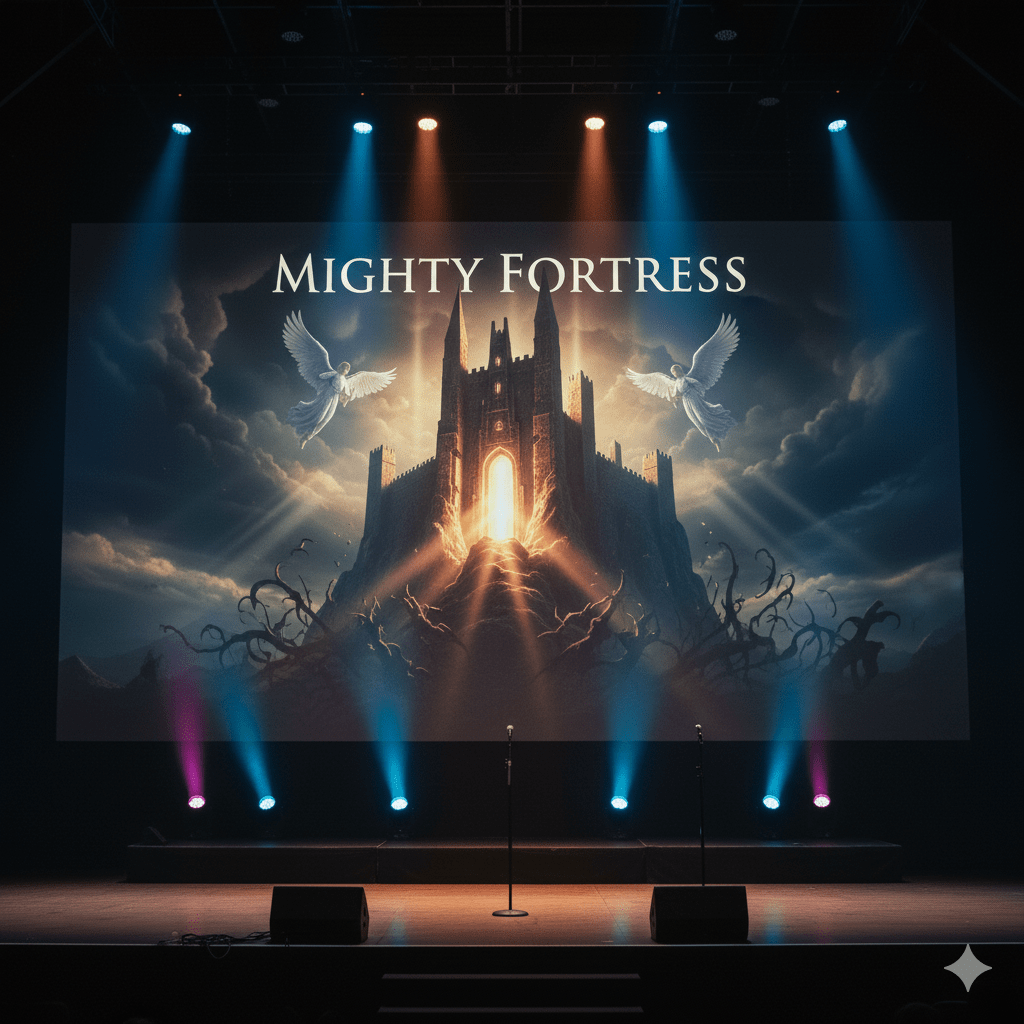
Pow-Wow Nights

Indian Summer

Indian summer drifts in slow,
Summer whispers, time to go.
But not before the drums resound,
Where colors dance and hearts are found.


Since childhood days, this has been my song,
Feathers, steps, the chants so strong.
Fry bread rising warm in air,
Spirit calling everywhere.


All night long the dancers sway,
Drums pound deep, the night turns day.
Shouts that echo, soft then loud,
Shaking life into the crowd.


Leo watches, eyes in awe,
David snapping what he saw.
Then from the circle she drew near,
A woman’s voice both strong and clear.


“Come,” she called with a smile so bright,
“Join the dance in the Lord’s pure light.”
Hesitant still, Leo stayed near,
Till David pushed him, laughter clear.


With her name Clear Blue Water, she showed the way,
Guided by Spirit in gentle sway.
Eyes like night, yet filled with light,
She moved in truth, and hearts took flight.


David leapt in, bold and free,
Moving as if he knew the key.
Together they danced, no shame, no fear,
Native blood runs deep and near.


Taino, Chippewa, Cherokee too,
Names of some of whom carry us through.
Their fight, their struggle, carved the flame,
We honor their story, we keep their name.
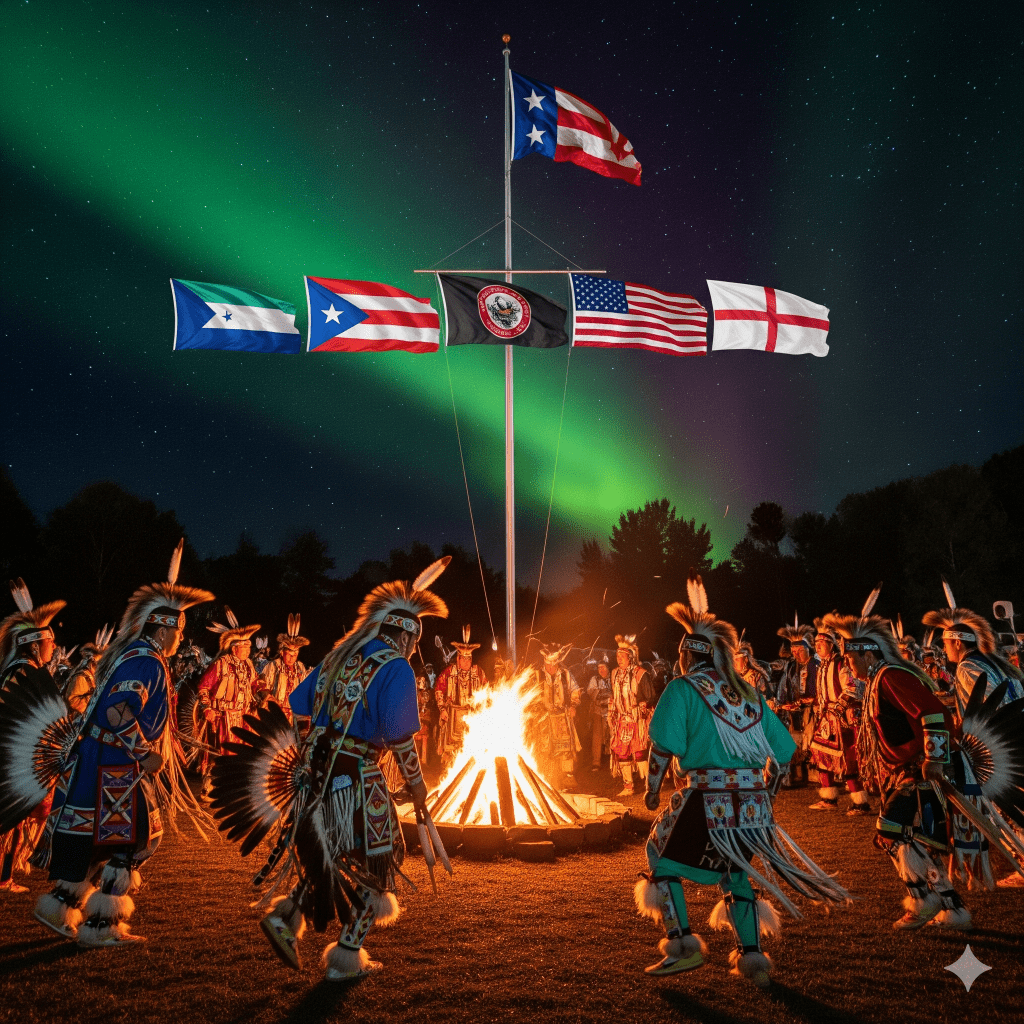

The dance was done, the drums grew still,
They walked to the fire where hearts could fill.
Fry bread, Indian tacos, bison and rice,
Every taste a sacred slice.


And as the stars crowned heaven wide,
They praised the Lord, their faithful guide.
Summer wanes, and autumn sings,
His hand upholds through winter’s wings.
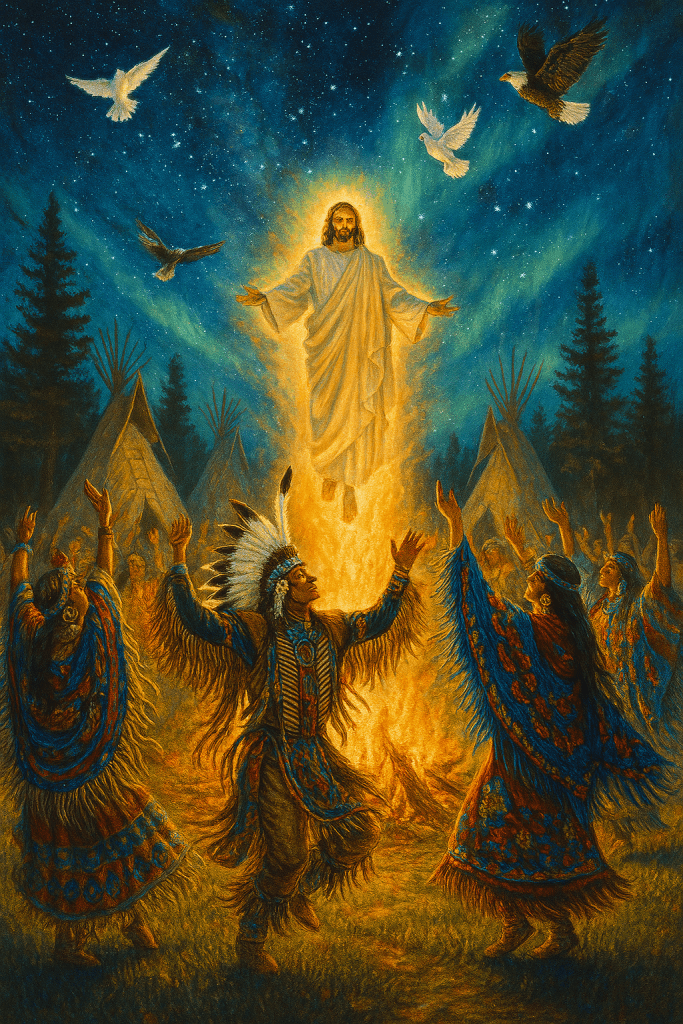

Till pow wow returns with song and light,
His children dance beneath His sight.
Their voices rise, hearts shining bright,
Celebrating God’s love through Pow Wow Nights.


Willie Torres Jr.

09/18/2025

If you feel inspired and uplifted by this content, please consider supporting my work at https://www.buymeacoffee.com/willie13. Every contribution helps me create more of what you enjoy …

147 responses to “Pow-Wow Nights”

  1. mosckerr Avatar

    קידושין
    ________________________________________________________

    Our Mishna opens with האשה נקנית.  And thereafter continues employing the feminine grammar of שלש rather than the masculine of שלשה, despite the fact that generally its the Man who acquires title to the Nefesh O’lam Ha’bah soul of the woman.  The דאורייתא מצוה – קידושין stands upon the יסוד of the oath brit sworn/cut between the pieces as found in Parshat לך לך.  

    ב:  ומאי איריא דתני שלש, ליתני שלשה?  משום דקא בעי למיתני דרך.  ודרך לשון נקבה הוא

    This means that any adjectives or verbs associated with it must also agree in gender. For example, describe a “way” in a sentence, the accompanying words would require the feminine format.  The Talmud often emphasizes the importance of grammatical precision. Our Mishna teaches here using a feminine term, it indicates that the subject matter, or the context of this Av Mishna (weigh the opening blessing of the Shemone Esrei which contains שם ומלכות.), specifically related to feminine priority, women produce children not men. A Torah oath blessing prioritized over Tehillim prayer-praises in similar fashion. Both קידושין and blessings require swearing a Torah oath-as expressed through the dedication of tohor middot.

    This means that any adjectives or verbs associated with האישה נקנית, must also agree with this gender. For example, if one were to describe a “way” in a sentence, the accompanying contextual words likewise require the grammar of the feminine form. The Talmudic law emphatically emphasizes the importance of grammatical precision. Our Mishna introduces a feminine grammar, the subject matter specifically related to feminine aspects or perspectives.

    However, Talmudic common law stands upon precedents. דרך understood as the k’vanna of אמת, the 8th Oral Torah middah expression of the dedication of מלכות לשמה! Talmud a common law system that learns through making comparative precedents. In like manner translating שם ומלכות, as worthless as tits on a boar hog.

    The path walk of the chosen Cohen people actively entails a defined culture, customs, values which separate our society from all other Goyim civilizations throughout all times. The idea that a Man acquires title to the Nefesh O’lam Ha’Bah soul of his wife – this abstruse and abstract idea alone, absolutely requires a Torah precedent from both the Written and Oral Torah. Simply reading the words as printed on the page of the Talmud as useful as a screen door on a submarine. T’NaCH predates the Talmud as common law scholarship.

    Jewish wisdom in the sight of the Goyim, we possess the inductive reasoning skills required to learn by comparing precedent similar cases one to another in both the T’NaCH literature and the Talmud. Goyim by contrast, simply read their sophomoric bible translations and award themselves fancy doctorate titles, while illiterate of the original Hebrew and Aramaic languages contained within the literature of the T’NaCH. Jews during the Hanukkah Civil War rejected Greek culture and syllogism 3 part deductive logic – a Century “before” publication of the NT Protocols of the Elders of Zion fraud.

    Religious Goyim only read Talmudic translations with an evil eye. Like the countries who walk out of the UN General Assembly and refuse to consider what the PM of Israel comes to communicate. Evil Eye, an expression of tumah middot spirits from the Yatzir Ha’Raw within the heart as understood by בכל לבבך\לבבכם within the דאורייתא תפילה קריא שמע. The Torah precedent for this interpretation made by rabbi Yechuda, ב’ ראשית the רמז opening word of the Torah. Bible translation only “read”: In the beginning. T’NaCH absolutely requires פרדס logic. The church denies the existence of פרדס logic similar to how the Goyim in the UN theatre lack דרך ארץ.

    Modesty and developing a sense of shame, applies equally to both men and women. UN delegates who openly parade & flaunt their contempt for Israel, compare to prostitutes who sell their wears on street corners. Fear of Heaven understands that eventually arrogant behavior permanently destroys the good name reputation of peoples and nations; post Shoah murdered the good name reputation of the church: by their fruits you shall know them. Once a good name reputation destroyed, like a balloon popped.

    ודרך לשון נקבה הוא דכתיב (שמות יח:כ) והודעת להם את הדרך ילכו בה

    The פרק יתרו יח:א – כז contains this specific פרט verse. Yitro advised Moshe to establish the Federal Sanhedrin common law court system in the first place. His first born son, גרשם, כי אמר גר הייתי בארץ נכריה, the descendants of Gershom (שופטים יח:ל) set up a graven image and engaged in avoda zarah; assimilation and intermarriage defines the way of the ערב רב in all generations. The middah of רחום the opposite of pity. The precedents which command to make genocide war against the nations of Canaan, to forever war against Amalek, to kill the stubborn and rebellious minor son stand out to distinguish blessing/curse life\death Torah brit oaths.

    The pursuit of justice among our people, often not a pleasant experience. Shalom requires trust. When an Israel damages another Israel, what must happen to restore trust? This question defines the Torah faith of justice. A person who develops “fear of heaven” compares to Avraham told to sacrifice Yitzak! Remembering the oaths sworn by the Avot defines the k’vanna of Yom Kippur, where HaShem made t’shuva and remembered the oaths sworn to the Avot to create the chosen Cohen people יש מאין through tohor time-oriented Av Torah commandments which dedicate middot from within the Yatzir Ha’Tov within the heart לשמה. Blowing the shofar serves as a precedent how to pronounce the רוח הקודש שם השם לשמה. Lips pronounce words, but the Yatzir Ha’Tov blows tohor middot spirits dedicated as Holy unto HaShem from within the heart; herein defines the k’vanna of tefillah. Consequently tefillah a matter of the heart. And not some ‘lord’s prayer’ to a father God in the Heavens. Of all the Torah commandments, the revelation of the 1st Sinai commandment, upon this commandment hang all the rest of the Torah commandments like a Mountain suspended by a single hair.

    The chosen path of the society of the chosen Cohen people: the path of righteous judicial justice between our people, learns from the trek travails Israel made out of Egypt. Torah faith: the obligation to pursue righteous compensation of damages inflicted upon others. This faith absolutely rejects theological belief systems which dictate, often on pain of violent murder, what a Man MUST believe; together with all manner of alien word translation Names of Gods, wherein these foreign alien theologies threaten a mankind with eternal continuous wars.

    והזהרתה אתהם את החקים ואת התורת והודעת להם את הדרך ילכו בה ואת המעשה אשר יעשון ואתה תחזה מכל העם אנשי חיל יראי אלהים אנשי אתמת שנאי בצע ושמת עלהם שרי אלפים שרי מאות שרי חמשים ושרי עשרת ושפטו את העם גכל עת והיה כל הדבר הגדל יביאו אליך וכל הדבר הקטן ישפטו הם והקל מעליך ונשאו אתך

    The Torah a common law legal system החקים judicial cases decided through precedents. 3 Man ביתי דין courts address issues of physical damages. While courts of 23 and 71 address Capital Crimes cases. Justice compares to wiping clean ones’ behind following a bowel movement. Sometimes the odor, quite unpleasant. Conflict and disputes define the Creation of Man in the Garden of Eden. The g’lut of Adam testifies to the nature of justice. Hence a Torah judge requires ‘Fear of Heaven’ as does a Sofer or a shochet etc.

    The Book of בראשית describes the Goyim nations following the floods in the days of Noach. The building of Bavel perhaps comparable to the slavery of Egypt. The lack of righteous judicial justice witnessed the collapse of Huge Empires throughout the annuls of history. Righteous justice speaks a language clear, that all Mankind understands. Injustice loaded in word rhetoric salads which conceal oppression and cruelty.

    The “acquisition” of a wife has nothing in common with beatings and violence. Armed with such knowledge, no woman would agree to marry such a violent deceitful man. The mitzva of קידושין envisions a oath brit alliance wherein partners commit to protecting the backs of their partner and family. Tzudakkah has its בראשית with a family-first priority.

    Liked by 2 people

  2. Sohair Avatar
    Sohair

    What a vibrant and heartfelt poem! The way you’ve woven together the sights, sounds, and spirit of the Pow Wow is truly captivating. Your words convey a sense of community, celebration, and deep connection to faith and heritage. The imagery of the dancers, the drums, and the traditional foods is so vivid that it feels like you’re right there with them, dancing beneath the stars 🌟✨. Beautiful work!

    Liked by 2 people

    1. Willie Torres Jr. Avatar
      Willie Torres Jr.

      Thank you so much 🙏 And Thank you for Reading and Commenting as well as Visiting… All Glory and Praise goes to God, the true giver of words and inspiration.

      I’m grateful He lets me share even a glimpse of His beauty through faith, heritage, and community.

      Be Blessed and continue to be a Blessing.

      Liked by 2 people

      1. Sohair Avatar
        Sohair

        Thanks a lot Willie.. Keep shining 🌹

        Liked by 2 people

  3. Darryl B Avatar

    Beautiful poem, brother, and amazing images! What a creative, inspiring post. 😎🙏

    Liked by 2 people

    1. Willie Torres Jr. Avatar
      Willie Torres Jr.

      Thank you so much Brother and Thank you for Reading and Commenting. It truly means so much to me..To God be the Glory and Praise…

      God Bless Brother, Hope you are doing well and enjoying life …

      Liked by 2 people

    1. Willie Torres Jr. Avatar
      Willie Torres Jr.

      Thank you so much and Thank you for Visiting, Reading and Commenting…

      Liked by 3 people

  4. Sunil Kumar Avatar

    Yes good post thanks 🙏

    Liked by 3 people

    1. Willie Torres Jr. Avatar
      Willie Torres Jr.

      Thank you so much and Thank you for Visiting, Reading and Commenting.

      Liked by 2 people

  5. bigskybuckeye Avatar

    Wonderful journey with these poetic verses. Growing up in Montana, I am familiar with the Native culture.

    Liked by 5 people

    1. Willie Torres Jr. Avatar
      Willie Torres Jr.

      Thank you so much for Visiting, Reading and Commenting. I’m glad the poem connected with you.

      Montana’s a beautiful place with such rich Native heritage. I’ve never been there, but I’ve heard about its deep Native roots.

      I have a very small part of Taino from Puerto Rico, which isn’t really recognized or acknowledged much, but I take pride in any of my Great Ancestors and heritage. My wife also has a small part of Chippewa.

      Liked by 3 people

      1. bigskybuckeye Avatar

        Willie, thank you for adding more to our conversation. While I have no Native American roots, I feel blessed to have read about and studied them.

        Liked by 3 people

    2. Willie Torres Jr. Avatar
      Willie Torres Jr.

      Thank you so much for being a part of this Journey . Be Blessed my dear Friend and Continue to be a Blessing…

      Liked by 3 people

  6. Kimberly Vargas Agnese Avatar

    Whoa!! Messianic and Native worship?? I never knew this existed.. for so many years I have felt caught between a Christian and Native divide. Not to mention the fact that Stephanie and I have been called to align with being messianic.. this worship blows me away.. it’s .. just.. yes… will be reblogging and sending to my daughter.
    Thank you for this.
    Hey! That said, would it be ok if I emailed u with a prayer request.. if not.. that’s ok.. if you feel so led.. please pray for my daughter and I.. more attack/ drama surround the release of the upcoming poetry collection… don’t want to post more drama.. but think I felt led to ask you in particular…

    Liked by 5 people

    1. Willie Torres Jr. Avatar
      Willie Torres Jr.

      Thank you so much and thank you for Reading and Commenting. I’m truly touched by your words. Yes, you can email me anytime.

      I would be honored to pray for you and your daughter, and I hope and pray that everyone who reads this will also lift you both up in prayer.

      God Bless You Both, today and always…

      Liked by 3 people

      1. Willie Torres Jr. Avatar
        Willie Torres Jr.

        You Are Very Welcome

        Liked by 3 people

  7. Tangie Avatar

    Thank you for sharing this very informative and mind opening blog. Have a great day.

    Liked by 5 people

    1. Willie Torres Jr. Avatar
      Willie Torres Jr.

      Thank you so much and Thank you for Reading and Commenting.

      All Praise and Glory to God Almighty.

      Be Blessed my Dear Friend and Continue to be a Blessing.

      Liked by 3 people

    2. mosckerr Avatar

      משנה תורה — קידושין פרק אב משנה

      What distinguishes a אב משנה from all other Mishnaot which the Gemara comments upon through bringing similar common law precedents from other Gemarot? The Siddur, specifically the kabbalah behind the Shemone Esrei places a “stamp” of Order upon the Talmud. As the opening blessing of Shemone Esrei contains a blessing of שם ומלכות. The Shemone Esrei, like the קריא שמע וברכת כהנים lacks שם ומלכות. The classic rabbinic blessing with שם ומלכות: ברוך אתה ה’ אלהינו מלך העולם. Av time oriented commandments absolutely unquestionably and definitely require k’vanna. The k’vanna required – the intent to swear a Torah oath brit alliance through swearing a תולדה of an oath. Yom Kippur definitively proves the power of swearing a Torah oath! Even HaShem had to make t’shuva and annul his vow to make of Moshe Rabbeinu’s seed the chosen Cohen people instead of Avraham Yitzak and Yaacov.

      Acceptance of the yoke of the kingdom of heaven – תפילה דאורייתא קריא שמע – acceptance within the Yatzir HaTov within the heart to breath life into the soul of the Chosen Cohen People through the sanctification of Av tohor time-oriented commandments which fundamentally require this יסודי כוונה. The Torah, Nach, Holy Writings/T’NaCH, the Talmud & Midrashim, and patently but of course the Siddur – doing any and all time oriented commandment requires the יסודי כוונה of breathing חיים into the soul of the generations of the Chosen Cohen to חיי מדור לדור the oath brit cut at the brit between the pieces which Creates the Chosen Cohen people through the קידושה of Av tohor time oriented commandments. The language תמיד מעשה בראשית twice repeated in the opening “blessing” which surrounds tefillah דאורייתא קריא שמע, this language serves as a פרדס רמז to time oriented Av Torah commandments.

      Tefillah דרבנן, the Shemone Esrei lacks שם ומלכות, which the opening first blessing absolutely requires! Hence translating שם ומלכות, misses the point and idea of this סוד Torah concept of swearing an oath brit alliance. Translating שם ומלכות like a screen door on a submarine. Common law does not “learn” through translations but rather only through making פרדס inductive reasoning comparison of similar precedent Cases. The T’NaCH makes its precedent Case comparison through similar sugyot containing a fixed sh’itta of counting the שם השם לשם מידות י”ג revealed to Moshe at Horev on Yom Kippur. The kabbalah of rabbis Akiva’s פרדס, Yishmael 13 rules of logical comparison methodologies which apply directed to the Holy Writings of the NaCH functioning as a Gemara to the, so to speak, Mishna Books of the prophets.

      The Talmud directly resembles a loom with its warp/weft opposing threads; Talmud has its aggadah and halacha opposing threads which in scholars in each and every generation determine the Way, Path, Truth that the culture and customs of the Chosen Cohen people walk therein: Walk before Me and be holy. Av tohor time oriented commandments define the Chosen Cohen Walk before HaShem.

      Since ק”ש, ברכת כהנים, ותפילה – אין להם שם ומלכות, as clear as the Sun in the heavens on a cloudless Summer day Name and Kingship translations do not amount to squat in defining the כוונה של שם ומלכות. Only Torah בניני אבות-precedents can possibly grasps the intent of the meaning of שם ומלכות. The Torah instructs that the Cohen HaGadol pronounces the שם השם לשמנ on Yom Kippur. Mesechta ר”ה introduces blowing the shofar. Blowing a horn requires air pressure from the lungs. But tefillah a matter of the heart.

      Therefore a person when blowing the Shofar on ר”ה must discern the כוונה between blowing air from his lung from blowing the Neshama soul dedicated on ר”ה to remember the Torah rebuke אל, the opening branch Spirit revealed at Horev following the repetition of the שם השם לשמה\שמע. The concept of שם, its not a word translation like as made at the Sin of the Golden Calf by the ערב רב שאין להם יראת אלהים. The word translation of אלהים, JeZeus, or Allah not “ONE” with the Spirit Divine Presence first Sinai commandment revelation – the greatest Torah commandment: תעשה מצוות לשמה.

      Hence מלכות similar to מלאך. את הרוחות של י”ג מידות מן התורה – these Divine Spirits, like the שם השם. They breath Creation into other spirits called מלאכים by means of swearing a Torah oath through שם ומלכות. Herein explains the סוד kabbalah of the mitzva of tefillah, as opposing to saying the praises contained in Tehillem. The latter serves as a Gemara which explains the k’vanna of the prophetic mussar expounded by the NaCH prophets.

      Reshonim commentaries on the Talmud Midrashim T’NaCH and – but of course – Av Siddur – failed to teach this kabbalah יסודי. Learning Talmud actively entails that the down stream generations make their פרדס דרוש pursuit of בניני אבות precedents expressed through the Holy Writings to the NaCH prophets etc. The 13 rules of rabbi Yishmael best serve the Holy Writings “Gemara” commentary made upon the NaCH Prophets “Mishna”. These diverse texts, on the surface so completely different and unalike — all stand upon the kabbala יסוד של משנה תורה. Talmudic common law not learned by reading Dof Yomi. Nor the Hebrew T’NaCH its mussar even remotely understood by reading the T’NaCH on par with a Harry Potter fiction story of a replacement Messiah for the witching world – for he whose name forbidden to pronounce. As if that name compared to the שם השם לשמה. Just that simple. No fancy dance’n.
      ___________________________________________________
      ___________________________________________________
      ___________________________________________________
      גופא: אי הכי קשו קראי אהדדי, וקשיא נמי מתני’ אהדדי קראי אהדדי. לא קשין. הכא דבתורה קאי, ותורה איקרי לשון נקבה; דכתיב (תהילים יט) תורת ה’ תמימה משיבת נפש; עדות ה’ נאמנה מחכימת פתיה. כתב לה בלשון נקבה. התם דבמלחמה קאי דדרכו של איש לעשות מלחמה, ואין דרכה של אשה לעשות מלחמה כתב לה בלשון זכר.
      __________________________________________________
      __________________________________________________
      __________________________________________________

      Kiddushin 2b, כי יקח איש אשה, and the gendered verb “יקח” — “take.” The Gemara explores why Torah uses masculine forms in some contexts and feminine in others. This verse, used as the proof-text that Torah often grammatically feminine, since תורת ה׳ תמימה uses the feminine form. The masculine usage is justified through verses like: דברים כ”ד:ה – כי יקח איש אשה חדשה… לא יצא בצבא ולא יעבור עליו לכל דבר; נקי יהיה לביתו שנה אחת ושמח את אשתו אשר לקח. Another example: דברים כ:א – כי תצא למלחמה על אויביך. Precedents: שמות רבה ל”ג:א, ויקרא רבה ל״ה:א Torah common law employs Midrash as a Reverence Book, as opposed to just another novel.

      בדרך אחד יצאו אליך” — masculine. ובשבעה דרכים ינוסו לפניך” — also masculine. But “תורת ה׳ תמימה משיבת נפש” is feminine. When the verse speaks of Torah, “דרך” takes feminine form (“תורה” = נקבה). When it speaks of warfare, “דרך” takes masculine, since “דרכו של איש לעשות מלחמה.

      רבנו בחיי בן אשר, the other son of the Rosh. His brother, Rabbi Jacob ben Asher, commonly known as author of the Tur. The Tur, the first to make a colage of Reshonim opinions upon statute law deductive reasoning which attempts to make a shallow reactionary flat reading of halachot which originate from the Talmud, but whose most essential connection to their Mishnaic language, completely and totally ignored by these statute law heretics.

      His infamous work on Jewish law, the Arba’ah Turim, dishonored the Rosh, who rejected the Rambam’s statute halachic law perversion. Rabbi Asher ben Jehiel (the Rosh), a prominent harsh critic of the Rambam, known for his works on Jewish common law, opposed the Rambam’s statute law code. Rabbeinu Bachya, the son of the Rosh and brother of Asher, the heretic, supported the Rambam premise that its permitted to distort Talmudic common law unto Roman statute law; just as Aristotle’s deductive syllogism – the Rambam revisionist history – replaced rabbi Akiva’s פרדס inductive reasoning of kabbalah, which defines the k’vanna of the Oral Torah revelation at Horev – with Aristotle’s Tzeddukim supported deductive syllogism. So too and how much more so the false messiah of JeZeus does not replace the Torah obligation upon the Moshiach to rule the land with righteous Judicial justice. Unlike how king David court treated the Baal of Bat Sheva.

      The contrast between Talmudic precedent-based reasoning and codificatory statute models influenced by philosophical and bureaucratic systems like those of Rome or Aristotle. The Rosh argued that reducing halakhah to a statute book severs it from Gemara reasoning and precedent. In his introduction to Piskei ha-Rosh, (The Rosh lived during the 14th century in Spain and later in Germany. The work summarizes and clarifies Jewish law (Halakha) based on earlier sources, particularly the Talmud. It serves as a guide for practical law, helping to resolve legal disputes and questions. Piskei ha-Rosh, organized by topics and often mirrors the structure of the Talmud, making it easier for scholars and students to navigate the material.), he writes explicitly that halakhic clarity comes only through reasoning from Talmudic sugya, not through memorizing codified rules…לא מפני שסומך אני על דברי, אלא מפני שראיתי עיקר הדין מן הגמרא. Dof Yomi by stark contrast totally uproots sugya integrity like as did the Rambam’s code uprooted Gemara precedents to understand the k’vanna of their Mishna – viewed from different precedent perspectives, multiple and diverse viewpoints.

      The כסף משנה, Karo’s commentary attempted to correct the central flaw in the Rambam perversion of halacha unto assimilated Roman statute law-cult of personality decrees. Yet his כסף משנה failed to link the sources for the Rambam halachot to similar halachot poskined by the B’HaG, Rif, and Rosh common law halachic commentaries. The purpose of halachot located within Gemara sugyot – similar Case/Rule precedents which permits down-stream generations to view the language of both the sugya itself and משנה תורה – the language of the Mishna itself viewed from a completely different perspective. Clearly the Rambam failed to grasp that משנה תורה means “Common Law”, ruled through Torah mandated Court-rooms; rather than, as he held, religious ritual observances kept by religious “Orthodox” Jews. Prophets enforced judicial rulings, they served as the policemen of the Sanhedrin Federal Court system.

      Rabbi Jacob ben Asher (the Tur), his Arba’ah Turim systematized halacha into egg crate like categories (Orach Chayim, Yoreh De‘ah, Even ha-Ezer, Choshen Mishpat). Rabbeinu Bachya ben Asher, his hermeneutic system integrates Rambam’s Ta’amei ha-Mitzvot (reasons for the commandments) rationalism with kabbalistic and midrashic allegory. He frequently uses Aristotelian categories (e.g., form/matter) alongside Zoharic metaphors — bridging rationalist and mystical traditions. But unlike his brother the Tur, his work employs Midrash as a resource of symbolic precedent which aligns more with פרדס-type reasoning than statute law. So while Rabbeinu Bachya absorbed elements of Rambam’s philosophy, his method remains aggadic–hermeneutic, not a legislative distortion. He didn’t codify halakhah; rather, he made his priority placed upon exegetical synthesis.

      The shift away from T’NaCH/Talmudic common law unto Aristotelian deduction, which post the Rambam civil war, supplanted the judicial court-room law, replaced with substituted simplified religious ritual observances! The Tur and Rambam codified halakhah into a system resembling Roman statutory jurisprudence. Rabbeinu Bachya, though a spiritual exegete (focused on their spiritual significance and deeper meanings rather than merely their literal or historical context). alas, philosophically he too legitimized this ירידות הדורות shift, by reconciling Torah hermeneutics with Aristotelian logic — thus laying a metaphysical foundation for halacha’s rationalization.

      Midrash serves as A) the primary commentary to Talmudic aggada. B) an important tool for resolving language dikduk/grammar and meaning for how the Talmudic aggadic passages interpret NaCH prophetic mussar.

      The Midrash Rabbah and its sister collections (Tanchuma, Mekhilta, Sifra, Sifrei) form the foundational commentary corpus for understanding aggadic material in the Bavli and Yerushalmi. R. Sherira Gaon (Iggeret, 10th c., also known as an epistle or letter), describes Midrash as the source pool (me’kor) from which the aggadot of the Talmud drew prophetic T’NaCH mussar interpretations. The academies, he writes, transmitted both halakhah and aggadah, with the latter preserved in Midrashic anthologies.

      Rashi and Tosafot frequently cite Midrash Rabbah or Tanchuma to explain difficult aggadot in the Gemara — treating Midrash as its commentarial background. For example: Rashi on 61b בכל לבבך of mesechta ברכות. quotes Devarim Rabbah to clarify aggadic context. The Maharal of Prague explicitly argues that to understand Aggadah of the Talmud, one must read Midrash Rabbah, for the language of Aggadah – symbolic, and “דרש אחד מאיר פני דרש אחר.” Hence Midrash compares to the different layers of a cake by which succeeding generations learn and interpret aggadic prophetic mussar, which defines the k’vanna of halachot throughout the Shas Talmud Bavli and Yerushalmi.

      The RambaN in his introduction to his commentary on the Chumash states that Midrashic Aggadot are “מאמרי חז״ל הנאמנים” transmitted with the same authority as halakhic traditions, though intended to elucidate revelation and prophecy through metaphor and סוד. Impossible to learn Midrash divorced from פרדס logic. Hence the Rambam wrote no commentary upon Midrash because he abandoned פרדס inductive logic for the simpler syllogism deductive reasoning developed by Plato and Aristotle, which the Tzeddukim supported in the Hanukkah Civil War.

      Midrash operates as a linguistic–juridical tool, dissecting the nuances of Hebrew syntax and morphology to extract halakhic or moral implications. This – precisely how derash differs from peshat — דרוש a method of interpretive jurisprudence, not “homily.” (a religious discourse or sermon that provides interpretation and application of scriptural texts, typically delivered during a religious service.) Sifra (Torat Kohanim) and Sifrei built entirely on dikkdukic precision. “ריבה הכתוב” (inclusion/exclusion logic); “יתור לשון” (extra word usage); ההידיע, את, גם, etc. These function as the grammar of revelation — how law and prophecy encoded through linguistic form.

      Even the Rambam in his introduction to his commentary on the Mishna acknowledges Midrash’s grammatical function — distinguishing midrash halakhah (based on linguistic structure) from midrash aggadah (based on allegorical language), yet both bound by grammatical fidelity to Scripture. Rabbeinu Bachya ben Asher in his introduction to the Chumash commentary explicitly says: “הלשון הקדוש… נדרשת בשבעים פנים, וכל דרש תלוי בדקדוק הלשון.” Midrash is thus the interpretive mechanism through which the prophetic mussar of Tanakh — decoded — a philological discipline, not mere storytelling.

      Sherira Gaon, Rashi, Maharal — Midrash serves as the background commentary to Talmudic Aggadah, revealing its conceptual precedent and metaphoric coherence. Sifra, Sifrei, Rambam, Rabbeinu Bachya: Midrash refines language precision — using dikduk and syntax to interpret prophetic mussar and the Talmud’s use of NaCH texts.

      עיין שמות רבה כ״ט:ד. משיבת נפש, עדות ה’ נאמנה מחכימת פתי. Learning requires an investment of both time and patience. A central flaw of religious books of Torah halacha, readers of these religious comic books, grow to fervently believe that they understand the depth of halachic intent based upon their reactionary shallow reading of halachic rulings ripped away from their Talmudic contexts which originally employed these halachic precedents as a chief tool to make a משנה תורה re-interpretation of both the language of the sugya of Gemara as well as the language of the Mother Mishna as well. Assimilated Roman statute law halacha directly compares to apple vinegar which lacks the essential “mother”.

      Apple vinegar is produced through the fermentation of apple juice. The “mother” is a substance composed of acetic acid bacteria that forms during fermentation, which is often considered vital for quality vinegar. In this metaphor, the “mother” symbolizes the authentic, organic essence or foundational principles that give a legal system its depth, integrity, and longevity. The adoption of ritual halacha without understanding its underlying purpose and connection to a specific Mishna, leads to a dilution\perversion of their original meaning and intent.
      ______________________________________________________
      ______________________________________________________
      ______________________________________________________
      מדרש רבה יתרו פרשת כט:ד — (תהלים יט) תורת ה’ תמימה משיבת נפש. א”ר לוי וכי לא היה גלוי לפני המקום שאם הוא מראה כבודו לישראל ומשמיען קולו שאינן יכולין לעמוד. אלא צפה הקב”ה שהן עתידין לעשות עבודה זרה שלא יהו אומרין אלו הראנו את כבודו ואת גדלו והשמיענו את קולו לא היינו עושים ע”ז. לכך נאמר שמעה עמי ואדברה
      _____________________________________________________
      _____________________________________________________
      _____________________________________________________
      Rabbi Levi expounds the p’suk תהלים י”ט תורת ה׳ תמימה, his drosh interprets Torah as the restorative path — derekh teshuvah — against the derekh ha-avodah zarah. Does restricting קידושין limited to a קום ועשה מצוה away from a tohor time oriented Av commandment qualify as avoda zarah?

      Chazal repeatedly warn that reducing Torah to technical compliance while detaching it from oath brit basis borders on avodah zarah because it divorces the act from the One who commands. Sanhedrin 63b – “כל העושה מצוה שלא לשמה, כאילו עובד עבודת כוכבים.” When a mitzvah is isolated from its covenantal derekh and turned into a detached ritual or statute, the form may remain but the orientation can drift toward derekh avodah zarah. Reducing the covenant of marriage to an act of legal acquisition risks mischaracterizing its derek. If one performs קידושין purely as a formal “transaction” without its covenantal frame—the mutual oath binding within brit Torah—then functionally, yes, it parallels derekh avodah zarah: a ritual form emptied of covenantal consciousness.

      Rabbi Levi’s “תורת ה׳ תמימה משיבת נפש” teaches that Torah restores the nefesh precisely because it is whole—תמימה. Fragmenting Torah into isolated קום ועשה acts without the tohor Av-command time-axis destroys that wholeness; what remains Av tumah avoda zarah. A mitzvah detached from its derek Torah orientation, simply not a neutral error—but structurally akin to avodah zarah, because it replaces divine command with human formalism. In Midrash Tanchuma Yitro ח, where the giving of Torah is described as קידושין between God and Israel—thereby showing that true קידושין must mirror תורת ה׳ תמימה rather than a transactional statute?

      Midrash Tanchuma, Yitro 8:
      בשעה שנתן הקדוש ברוך הוא את התורה לישראל, אמר להם:
      הרי אני נותן לכם ספר הקידושין; מכאן והלאה אתם לי ואני לכם.
      אמרו כל אשר דבר ה׳ נעשה ונשמע — ככלה המקבלת ספר קידושיה.
      ונתן להם תורה — כספר כתובה.

      Thus restricting kiddushin to a bare קום ועשה betrays its the oath brit that time oriented commandments create, in the image of HaShem the first born Chosen Cohen people in all times and generations. Midrash Tanchuma shows that kiddushin serves as a reenactment of Sinai; therefore, divorcing קידושין from its tohor Av time-oriented commandments renders the mitzva of קידושין unto but an empty form. In lateral Sanhedrin jurisprudence perverted into ritual religious orthodox observances, an empty void; structurally identical to avodah zarah: worshiping the shell rather than the living brit.

      Liked by 2 people

Leave a reply to mosckerr Cancel reply

I’m Willie

Hello and Welcome to my Website.
My name is William Torres, but my family and friends call me Willie. It is a pleasure to be here with you today, and I am excited to share my faith journey with you.

My journey has been amazing and fulfilling as a new Christian. I have seen God work in my life in ways I never could have imagined. I have grown closer to my faith and have seen Him work in my life and the lives of those around me. I am truly blessed to call myself a Christian, and I am excited to continue to grow in my faith.

I believe that I have come a long way in life. Over the years, I have worked hard to become a better man, husband to Frances Torres, and father to our children. I have strived to be a good friend and companion to those I have been fortunate to build relationships with. I have learned to appreciate the small moments of joy and fulfillment that come with every human connection.

I began writing stories that I believe were inspired by the Holy Spirit. These stories are my testimonies about the different trials I have gone through, and how the Lord has helped me to overcome them. Through this process, I’ve discovered that I can forgive those I once vowed to never forgive, and in turn, my relationships with them have been restored. They are now a huge blessing and a special part of my life.

I hope that through my writing I can be a source of encouragement to other people in their faith and relationship with the Lord. I pray that those who read my words will be blessed by the Lord and find strength and comfort in His Word.

To be honest, I have had to come to terms with the fact that I am not perfect, but it is in this place of acceptance that I am able to truly worship a God who is. His infinite love brings me joy, strength, and peace, and I am thankful for the privilege of being able to serve Him.

I have also started a Social Media Ministry on Facebook, which I invite you to visit here. Being Crazy For Christ is a platform where I share my journey of faith, and I am also on YouTube – Willie Torres Jr. and I am excited to see all that God will do through it.

This is my hope, and I’m so thankful for it. I’m thankful for the love of Jesus, and I’m thankful for the chance to grow in Him together with you.

You Are Loved

Willie Torres Jr.

Let’s connect